
Test the actual golfer with the longest club, shoes, mat thickness, and full follow-through.
Room-fit pillar
Golf simulator room size: check space, height, and layout before buying
Room fit is the first filter. A simulator that looks perfect online can still be wrong if the golfer cannot swing safely or if the launch monitor does not have enough space to read the shot.
Independent guideRoom-fit firstAffiliate disclosure
Disclosure: Golf Sim Scout may earn a commission when visitors buy through some links. Recommendations are structured around buyer fit, room constraints, pricing, and practical trade-offs. Read the affiliate disclosure.
Before you compare
Use this page before jumping elsewhere
Most readers need the shortlist, room and budget check, and comparison table before comparing product pages. These buttons help you check the right details in order.
Buyer shortcut
Choose the buying question that matches you
Most readers do not need every golf simulator guide at once. Pick the constraint that could make you buy the wrong setup, then continue from there.
Quick answer
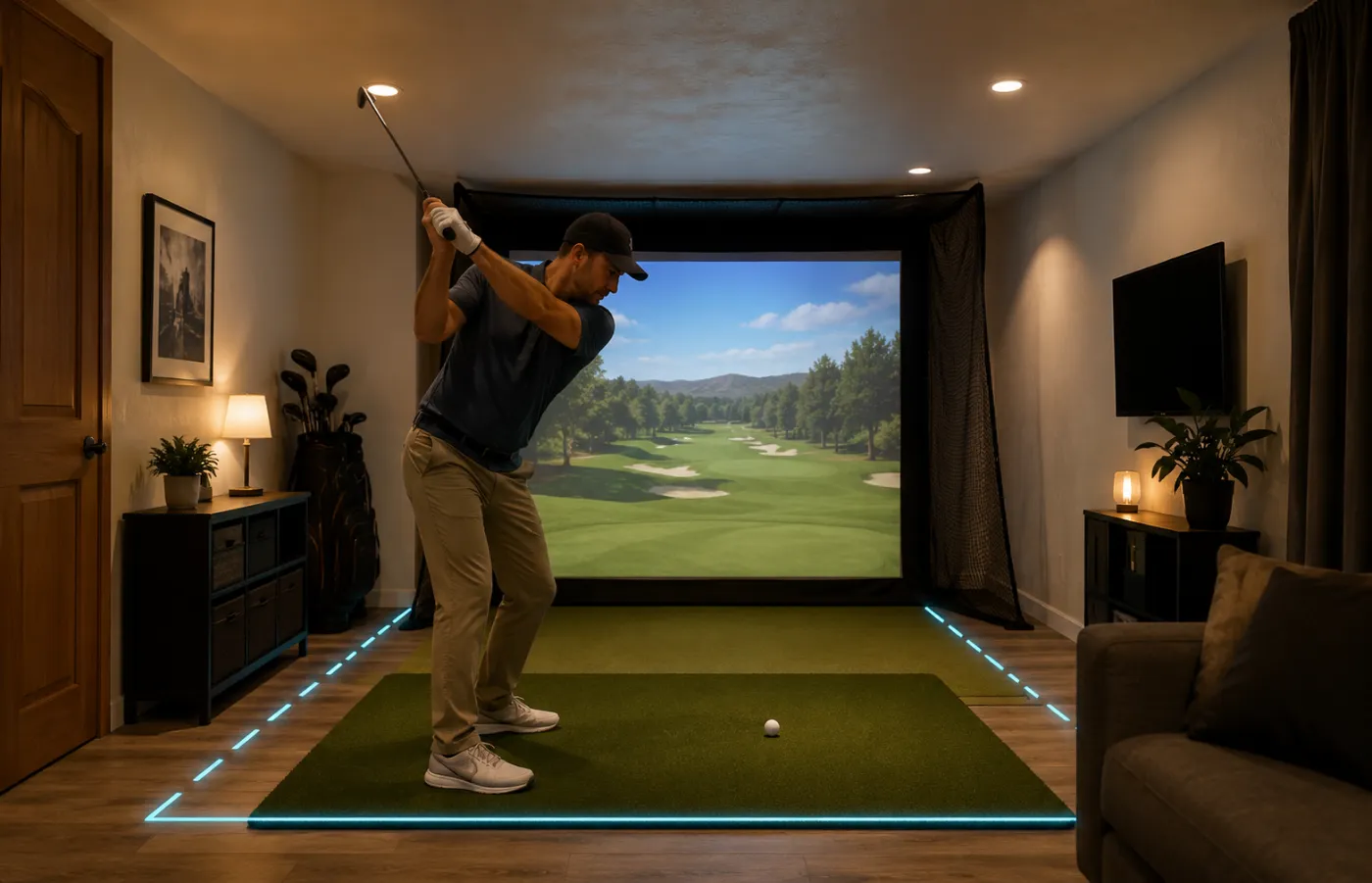
Measure the real hitting position, not just the empty room. Check ceiling height with the tallest golfer, usable width for left- and right-handed players, depth for ball flight or radar tracking, and space for the screen, net, mat, and follow-through.
Fit first
Measure the room before comparing simulator gear
Use this section to narrow the decision before opening product or retailer pages.
Leave room for hitting position, screen or net, launch monitor spacing, and safe movement.
Consider stance, swing path, left/right-handed players, and side protection.
Buyer fit
Who should buy / who should skip
Use this filter before comparing products. A good golf simulator choice starts with fit, not with the loudest product claim.
Who should buy
- You are not sure whether a bedroom, basement, garage, or spare room can work.
- You need a space checklist before choosing radar, camera, net, screen, or projector routes.
- You want to avoid buying equipment that cannot be used safely.
Who should skip
- You have already measured and confirmed a dedicated simulator room.
- You only need product comparisons and not room planning.
- Your ceiling or swing path is clearly unsafe for any full swing.
Measurement depth
Measurements that prevent the wrong purchase
Room-size pages should keep buyers from buying hardware before the physical setup is safe.
A thick mat reduces clearance; measure with the intended clubs and swing style.
Radar and camera systems can need different ball-to-device and ball-to-screen spacing.
Shared spaces need more width and safer stance planning than a single-player setup.
Measure first
Room-size checks for a home golf simulator
Write these down before clicking product links.
| Check | What to confirm | Why it matters |
|---|---|---|
| Ceiling height | Full swing with driver, normal shoes, and expected mat height | A room can look tall enough but fail during follow-through |
| Usable depth | Hitting position, ball flight, screen/net distance, and launch monitor spacing | Depth affects safety, tracking, and whether screen or net routes work |
| Usable width | Stance, follow-through, side protection, and right/left-handed golfers | A narrow room can feel unsafe or limit who can use the simulator |
| Ball protection | Net, screen, enclosure, side curtains, ceiling protection, and bounce-back risk | A good monitor does not protect walls, ceiling, windows, or people |
| Display route | No projector, TV/monitor, tablet, or projector + screen path | Projector decisions change cost, depth, mounting, and room layout |
| Storage and setup time | Whether the room is dedicated, shared, garage, or portable | A setup that is annoying to assemble may not get used |
Why trust Golf Sim Scout
Built to help buyers avoid the wrong home simulator setup
Most expensive mistakes happen before checkout: the room is too tight, the real budget is higher than expected, or the buyer compares devices before choosing the setup route.
We frame picks around room size, ceiling height, portability, and setup effort before product excitement.
We separate launch monitor price from mats, nets, screens, projectors, software, and room protection.
Some links may earn a commission, but the page is structured around buyer fit and practical trade-offs.
The goal is to help readers avoid the wrong route before they open a retailer or brand page.
Deep guide
Room-fit decisions that change the setup
Different room constraints point to different simulator routes.
Low ceiling
Consider shorter-club practice, no-projector setups, or portable routes before forcing a full room.
Limited depth
Camera-based launch monitors may be easier than radar units that need more ball flight.
Shared room
Storage, setup time, and easy breakdown matter more than a permanent studio look.
Deep guide
What to measure twice
A tape measure is only the beginning.
Hitting spot
Mark where the mat will actually sit, then swing from that point.
Screen or net zone
Confirm impact area, side clearance, and ceiling protection.
Device position
Radar and camera units have different placement needs.
Next buying step
Compare current product options after the fit check
Use these options only after checking room fit, budget, setup effort, and software needs. Product availability, package details, and pricing can change, so confirm current details before buying.
FAQ
Common questions before you buy
What room dimension matters most?
Ceiling height and safe swing clearance usually come first, followed by usable depth and width.
Can a low ceiling still work?
Sometimes, but test the real golfer and consider irons-only, portable, or no-projector routes if driver is unsafe.
Should I choose radar or camera indoors?
It depends on depth, lighting, budget, and data needs. Tight rooms often favor camera-based options.